It seems that every idea is initiated as the result of a need and the forming of the
Kettering Medical Center Amateur Radio Association was no exception. In January 1978, a
major blizzard occurred which paralyzed the entire Miami Valley area. Due to treacherous
roads and impassable snowdrifts, a state of emergency was declared.
Because of the hazardous road conditions, doctors and nurses as well as other
hospital personnel were unable to get to work. Four-wheel drive vehicles were borrowed to
bring essential staff and medical personnel into the hospital. As calls came in from various
staff members indicating that they were stranded, there was no way to communicate the infor
mation to drivers on the road. Often, delays were encountered, due to insufficient directions
and a lack of information.
CB radio was enlisted to fill the gap. However, users found it to have very short range
especially since the band was overloaded by many casual users who also found themselves
at home.
A real need for reliable communication was established as a result of that experience
and a small group of employees at Kettering Medical Center felt that amateur radio could be
the answer to the problem.
On April 6, 1978 with the blizzard being history, this group decided that it would form
an amateur radio club to help fill this need and to foster radio knowledge and the fellowship
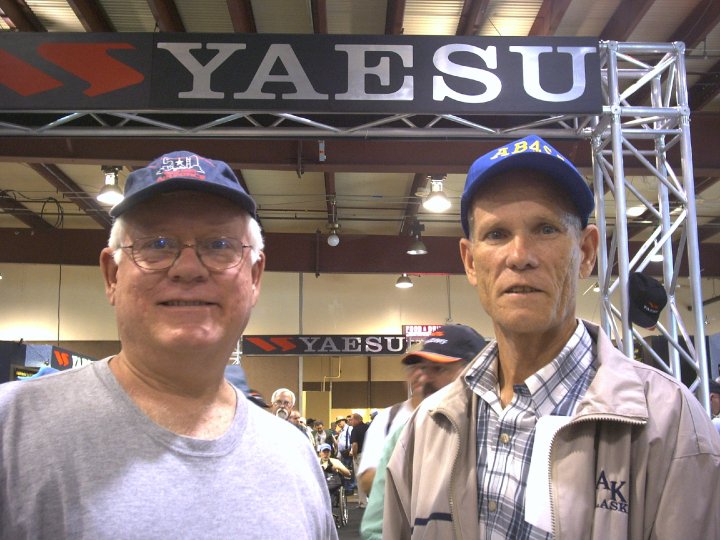
of radio operators. Nelson Lawhorn, AB4SA, was the founding president for the first year. Below is a photo of Nelson on the right and second President Bill White, WB4LAI on the left. Bill was president from 1979 to 2000.
The founding members include:
Theo Agard, WD8LWR, Bill White (WB4LAI), Nelson Lawhorn (AB4SA), Norm Barney, (N8AJO), and Herb Perrine (WD8DLQ).
In the early years, a borrowed HF radio was set up at the old Charles Kettering home
at Ridgeleigh Terrace. In 1979, a home was found at Kettering Hospital in one of the
equipment rooms on top of the new northwest wing which was dubbed Penthouse 3. For a
while, the club struggled with how to raise funds to purchase new equipment. A fundraising
plan was presented to the hospital administration but was rejected because key personnel
did not want public fund-raising to take place in the name of the hospital. Instead, the administration gave the club $1500 and the Development Department matched the funds with an
additional $1500. The monies were spent in the purchase of a complete R. L. Drake HF
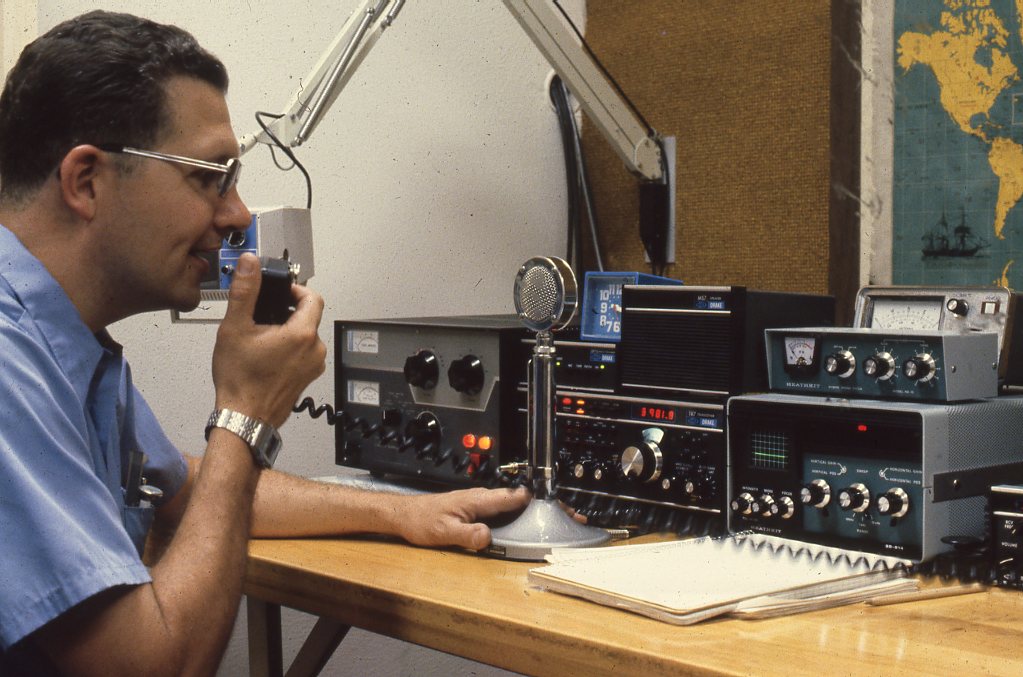
station including a UV-3 tri-band, TR-7, L4-B, towers and antennas. Below is a picture of Norm Barney (N8AJO) at that station around 1982.
During the early years, the Monsanto Amateur Radio Association allowed the KMC
group to use their repeater system, however, it was soon apparent that a club-owned repeater
would have many advantages. In September of 1980, a vacated frequency pair of 147.075/
147.675 was obtained and by October, the first KMC repeater was on the air.
The first system was nothing more than a receiver and transmitter hooked to separate
antennas with a home brewed control circuit built by Bill White (WB4LAI). By mid 1981, new
equipment had been purchased with a new duplexer that improved the system's performance
greatly. The new equipment was placed in Hospital Equipment Room Penthouse 1 and two
19 inch racks were added to allow for the experimentation that was to follow. This system
operated for many years as 147.675 output but was inverted to 147.075 in 1987 to comply
with the new ARRL band plan that was adopted by the Ohio Repeater Council. This system
had interference from two Cincinnati systems 15 kHz away, therefore, its operating profile
could not be increased without incurring additional interference.
In early 1982, the need for a higher profile frequency was recognized and the 145.33
repeater was added at Sycamore Hospital. The old 147.675 was linked to the 145.33 to
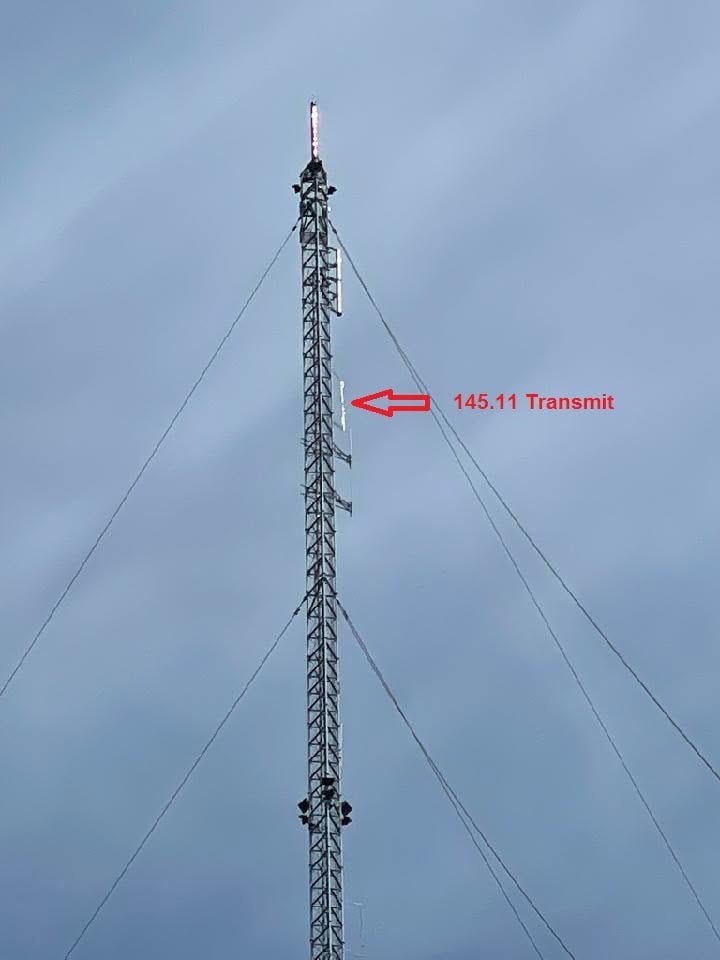
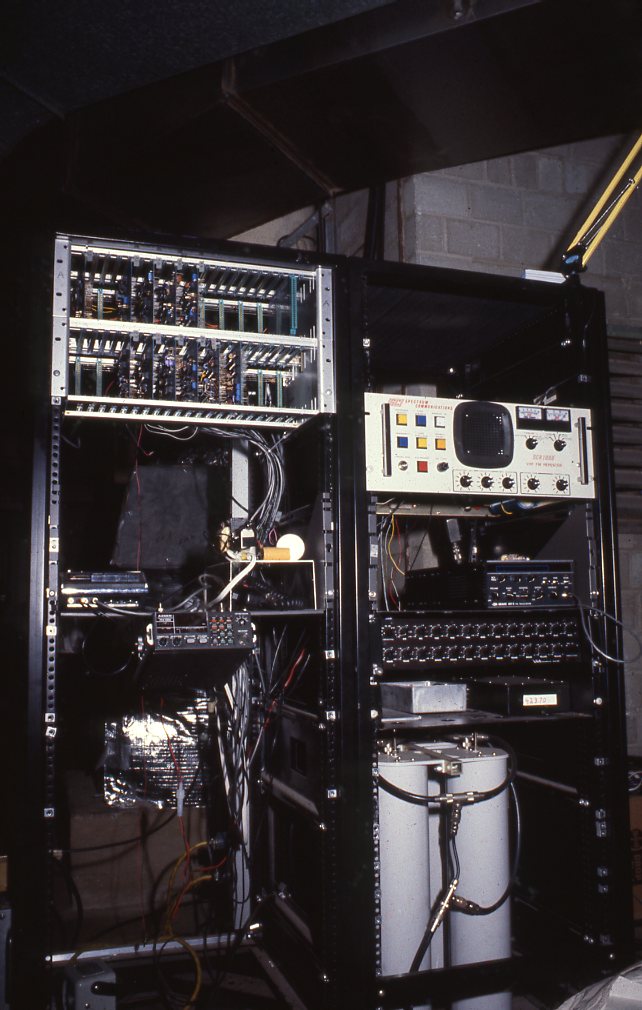
supply communication between the two hospitals. In late 1982, a much better location was offered to the club on a new tower that was to be built in the spring of 1983. The 145.33 was changed to 145.11 in February 1983 to minimize any interference to Indiana systems, and placed into service in March 1983 at the 1000 foot level on the new WPTD channel 16 tower. The first 145.11/147.075 control system is shown below which resided at Kettering Health Main Campus and to its right is the CH 16 tower.
This site used a common duplexed antenna that caused problems from the beginning due to
tower joint noise and mixing with the local TV signals. In November of 1986, the receiver was removed
from the channel 16 site and numerous lower level receivers were added to the system which
finally cured the age old joint noise problem. Our first remote receiver was near Eaton and
was installed in July of 1985. In November 1984 we installed our new computer controller on
the 145.11 system. This controller was hand wired and designed by Bill White (WB4LAI).
In January of 1982, coordination papers were sent to the Ohio Repeater Council for
a new 220 system on 223.50 that was designed to be the hub of a regional link system
dubbed the "MetroLink.” The system was changed in March 1983 to 223.90 due to
interference from the Bellefontaine area, but before it could get well established, there were
questions about the continued use of the 220 band. Due to this concern, the link system was
put on hold and then abandoned, however, the repeater stayed in operation and was moved
to a higher location near the Dayton Mall in 1983. At the Dayton Hamvention in April of 1986,
the Association's old Drake HF system was sold and new equipment bought which could be
computer controlled. This system was then linked with the 223.90 repeater near the Dayton
Mall to create a remote base for HF. This new system was designed to operate on the 160,
75, 40, 20, 15 and 10 meter bands running 1000 Watts or more output on the first four bands
with touch tone control of the station's triband beam.
In the spring of 1987, the old 850 foot site on the channel 16 tower was converted to
a 224.16 MHz repeater site. In January 1988, the 145.11 repeater in Columbus went on the
air and was permanently linked to the 145.11 and 224.16 system in Dayton. This system
became the "Emergency Gateway to the Capital" which interfaces with the Ohio Emergency
Management Agency through the Central Ohio ARES of Columbus.
In the spring of 1989 the Association developed a new packet node system that had
a 2 meter local area network node on 145.69 MHz which was linked to the mid-net trunk
system. This system also has a Converse node for multiple connect QSOs. The Association
also supplied the Mid-Net trunk system, the Dayton and Springfield trunk nodes and sites.
This system supplies reliable packet communications for Cincinnati, Dayton, Columbus,
Cleveland and many point between.
Through 1990 a new organizational structure was developed that defined the Association as an employee auxiliary organization with an identity separate from KMC. All equipment
is owned and insured by the KMCARA.
In 2000, the association was reorganized into a 501(c)3 organization called the West Central Ohio Amateur Radio Association (WCOARA). Keith Burnette, KB8GYB was the first president of this new organization and the driving force behind its developement. He remained as president for 23 years until his death in 2023.
ACTIVITY HISTORY
The Association has been involved in many activities since its founding. The ideas and
imagination of its members have produced an interesting history of achievements. Some of
these special events are recalled in the following history.
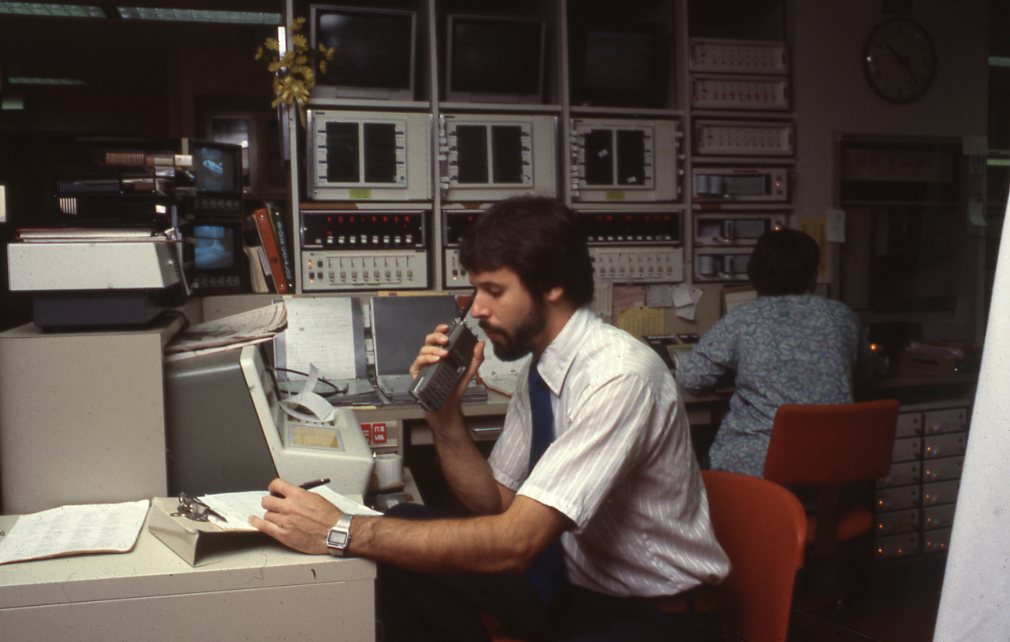
From the beginning of its formation, the Association and the hospital have seen numerous benefits in the participation of the KMCARA operators in hospital drills and tests. Below is Gary Eldridge (KC8UD) providing communication in one of the Intensive Care Units at Kettering Health-Main Campus.
These tests were conducted at least twice a year and provided a mechanism to improve response time and communication efficiency. The group's participation in area-wide amateur radio drills and scenarios had also been very helpful.
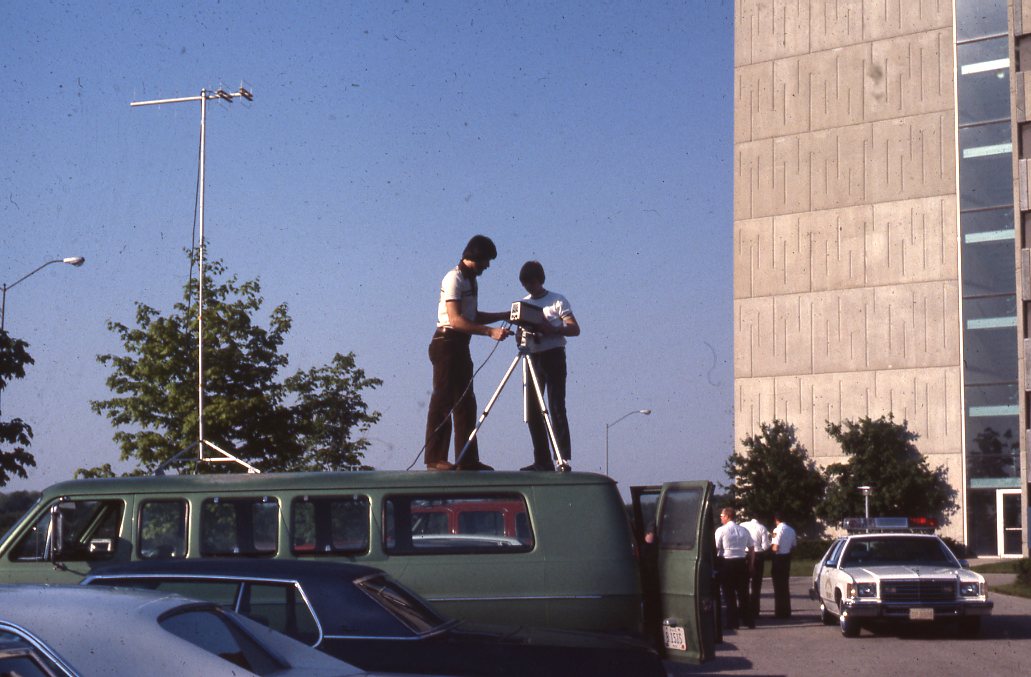
For a time, the organization was strong in trying new radio technology to improve communication. Twice in area-wide tests, the Association members provided live amateur television coverage of the disaster site to the hospital. Video data was also sent via television to the hospital concerning numbers of victims and transportation. Here, below, Gary Eldridge (KC8UD) and Wade Shrack (KA8MKA) set up the ATV link back to the hospital from Bethany Luthern Villiage in Centervill, OH.
Television has played an interesting part in the story of the Association. Beyond the capability of supplying amateur
radio television to and from the hospital, the Association meetings were televised live with
call-in questions over the Continental and Viacom cable systems. This was done from
November 1982, to September 1984. Many aspects of amateur radio and special guest
speakers were presented to the general public. This program came to an end when key
television personnel left the employment of KMC.
As a result of a special waiver granted to the KMCARA by the FCC, space shuttle
transmissions have been made available on the repeater system. The waiver has also made
it possible for other amateur radio groups to provide this service.
Communication is always a critical item at a modern health care institution. On June
19, 1983, due to a possible lightning strike, the internal telephone systems at both Kettering
and Sycamore Hospitals were rendered inoperative. Members of the KMCARA moved into
position at both hospitals. Some 25 amateur operators took part in setting up and operating
stations in key areas of both hospitals such as the emergency room, surgery, central supply,
public relations, several of the nursing units, the main telephone switchboard and other
strategic locations. Many of the medical personnel soon realized the value of amateur radio
communication as only a selected few telephone lines were operative to the outside Bell
system. The radio communication kept our repeaters busy for almost 14 hours until normal
telephone service could be restored. At later dates, the impact of other telephone failures
was also reduced by the service of the KMCARA radio operators.
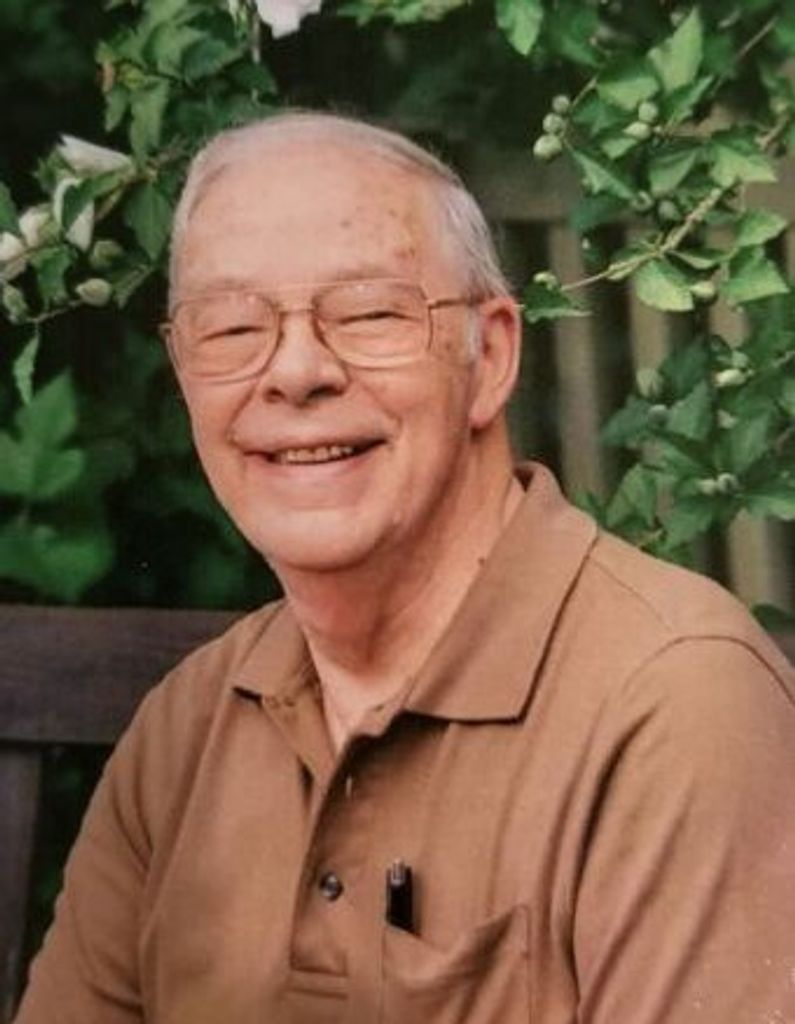
In April of 1985 we held our first West Central Ohio Amateur Radio Emergency Service (WCOARES) net. This net started by Phil Thomas (KA8KEJ/N8LJA) has been a real training device for area hams. It still runs today at its original 8 PM, Wednesday evening slot. Phil also started and was the voice of "DaytonLink", a local ham radio news program that ran on our 145.11 repeater system for many years. He first started making the program at Kettering Hospital with the help of Gary Eldridge, KC8UD and Bill White WB4LAI acting as recording and editing engineers. In later years he was able to do this at home and used a modem to send the audio files to be used on the repeater. This program was first played each week on the WCOARES net so was one of the features of the net. Phil is pictured below.
The Association repeaters and members have been used in many other public service
and emergency events. During the Miamisburg train derailment, the system was used for
phone patches, coordination of agencies throughout the state, contact of radio operators with
each other and information updates during the disaster.
Well over a hundred calls for assistance a year have been handled through the
KMCARA system. From medical emergencies to stranded motorists, the system has
performed well. Soccer tournaments, bike rallies, triathlons, long distance runs, and many
other events have benefitted from the public service aspects of the KMCARA.